

The list of World Heritage of the United Nations Educational, Scientific and Cultural Organization (UNESCO) includes twelve sites in Serbia which, within five entries, are placed under the protection of this organization as a place of exceptional importance for world culture, science and education.
The first protected sites are the medieval complex of monuments Stari Ras and the monastery Sopoćani, which were placed under protection in 1979. After Serbia’s accession to the UNESCO Convention, four monasteries from Kosovo, the remains of the Romanian Palace and three stećak tombstones were placed under protection.
Gamzigrad-Romuliana, Palace Gallery
The palace complex and the memorial complex Gamzigrad-Romuliana Palace Gallery in eastern Serbia is an archeological site near Zajecar in eastern Serbia, which has been on the UNESCO World Heritage List since June 29, 2007. Originally named Felix Romuliana, the palace was built at the end of the third, beginning of the fourth century on the initiative of Gaius Valerius Maximilianus Gallery, and the name is new after his mother. The site consists of fortifications, a palace in the northwestern part of the complex, basilicas, temples, hot baths, a memorial complex and a tetrapilon. The group of buildings is also unique in the intertwining of ceremonial and memorial functions.
The fortification, the palace and the memorial complex are a unique testimony to the Roman building tradition, which is permeated by the ideological program of the second tetrachia and the Gallery itself as their builder.
wikipedia Гамзиград
Medieval buildings in Kosovo
They represent a UNESCO subject on the World Heritage List, which is located in Serbia, Kosovo and Metohija. It includes four medieval monasteries of the Serbian Orthodox Church – Visoki Decani, the Pec Patriarchate, the Mother of God Ljeviska and Gracanica. First, in 2004, Visoki Decani was on the list, and then two years later, UNESCO included the other three monasteries. The four buildings of the site reflect the high points of the Byzantine-Romanesque church culture, with its distinctive style of wall painting, which developed in the Balkans between the 13th and 17th centuries.

Tanjug Visoki Decani
The monastery of Visoki Decani was built in the middle of the 14th century for the Serbian king Stefan of Decani and is also his mausoleum. The Pec Patriarchate Monastery is a group of four domed churches with a series of wall paintings. The frescoes of the Church of the Holy Apostles from the 13th century are painted in a unique, monumental style. The frescoes from the beginning of the 14th century represent the appearance of the new so-called paleological renaissance style, combining the influences of the Eastern Orthodox Byzantine and Western Romanesque traditions. This style later played a crucial role in Balkan art.
However, due to management and preservation difficulties stemming from the region’s political instability, a group of medieval Serb monasteries in Kosovo have been placed on the endangered heritage list.
Stari Ras and Sopoćani
On the outskirts of Stari Ras, the first capital of the former Raska, there is an impressive group of medieval monuments consisting of fortresses, churches and monasteries. In addition, the ancient city of Ras drew strength from its position at the crossroads and enriched itself under the influence of East and West. Numerous monuments form a unique architectural complex that testifies to the period when the capital of the Serbian state was located in Stari Ras. These buildings, erected mainly between the 9th and 11th centuries, express the architectural style characteristic of the Raska school.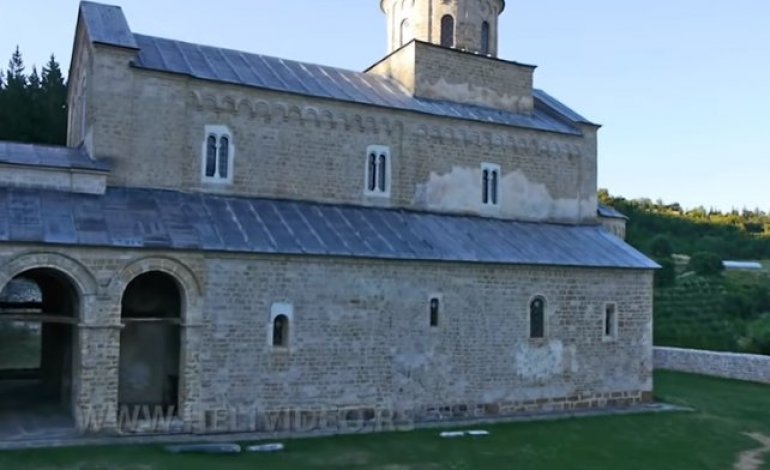
wikipedia Сопоћани
The people of Sopoc, on the other hand, remind of the contacts between the western civilization and the Byzantine world. The monastery is known for the exceptional quality of its decorative frescoes, which provide historical records about the family of the founders of this monastery. The quality of the compositions, mostly created in the 13th century, testifies to the vitality of Byzantine art at the time when Constantinople was in the hands of the Crusaders.
On the other hand, the composition of the frescoes that adorn the monastery of St. George in Stari Ras is original in the processing of figures in the manner of icons and draws inspiration from ancient art. Peter’s Church, the seat of the Bishop of Raska, is also decorated with frescoes from the 13th century.
Stari Ras and Sopoćani were included in the World Heritage List in 1979.
Stećci – medieval tombstones
The medieval necropolis of stećak tombstones, located in Perućak, is one of the best-preserved necropolises in this region and was inscribed on the UNESCO World Heritage List in 2016. As many as 28 sites located in BiH, western Serbia, western Montenegro and central and southern Croatia, represent these cemeteries and regionally recognizable medieval tombstones or stećci. The cemeteries, which date from the 12th to the 16th century, are arranged in rows, as was the usual style in medieval Europe. The stećak tombstones are mostly carved from limestone. They contain a wide range of decorative motifs and inscriptions that represent iconographic continuities in medieval Europe, as well as locally recognizable traditions.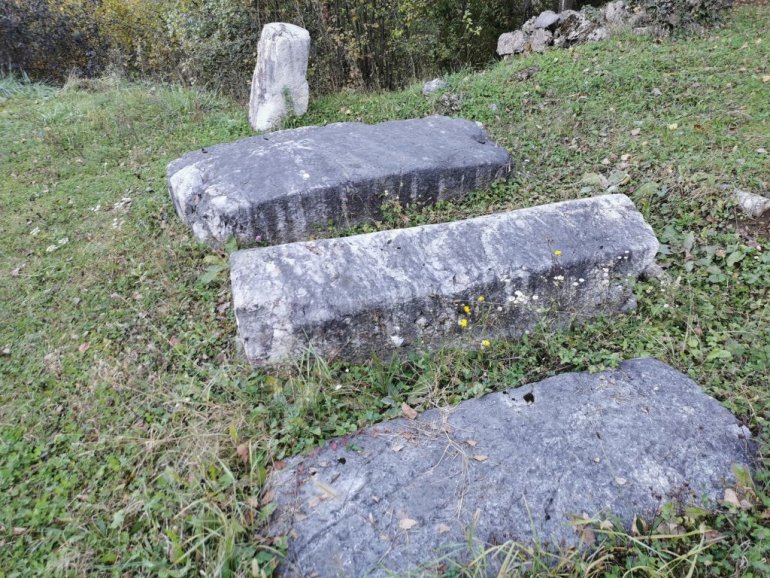
RINA Stećci
Studenica Monastery
Studenica Monastery is one of the oldest and largest Serbian medieval monasteries, which was inscribed on the UNESCO list in 1986. It was founded by Stefan Nemanja, the founder of the medieval Serbian state, at the end of the 12th century.
It is the largest and richest Serbian Orthodox monastery. Its two main works, the Church of the Mother of God and the King’s Church, are built of white marble and contain invaluable collections of Byzantine frescoes from the 13th and 14th centuries. Studenica is an exceptional and well-preserved example of a monastery of the Serbian Orthodox Church.
Tanjug / Sasa Petrovic Studenica Monastery
Nominated sites from Serbia
For 19 years, the list of nominees includes Djerdap National Park, Deliblato Sands Special Nature Reserve, Shar-Planina National Park, Tara National Park and Devil’s Town.
In 2010, the monastery of Manasija, Rajačke Pimnice, Smederevo Fortress and Caricin grad were added to the list of nominees. Bac joined the list of nominees only in 2019.
Apart from Bac, in the same year, the National Parks on Frushka Gora, Tara and Kopaonik were nominated for the list of natural heritage of ancient and ancient beech rainforests of the Carpathians and other regions of Europe.
Last year, UNESCO accepted Serbia’s proposal to nominate the borders of the Roman Empire, more precisely the Danube Limes, for the World Heritage List.
Follow us on social media


Comments are closed.